
Being Well Podcast: How to Have Hard Conversations with Celeste Headlee
Learn how to navigate hard conversations to feel more connected, with special guest and award-winning journalist Celeste Headlee.

Learn how to navigate hard conversations to feel more connected, with special guest and award-winning journalist Celeste Headlee.

Learn how to have more ‘equanimity,’ which is what allows us to maintain our composure, presence of mind, and perhaps even wellbeing under challenging circumstances.
Chris Bailey talks about how to be more productive and improve your ability to focus on the things you really care about, without it becoming a source of stress.
How have children experienced this year’s challenges, and how can we get better at talking with them about race and racism? Dr. Allison Briscoe-Smith joins Forrest to explore trauma, resilience, and effective coping, and particularly the unique challenges experienced by young people and their parents.
On today’s episode of @beingwellpodcast, Forrest and I explore how we maintain contentment, calm, or inner peace, while still aiming high, pursuing good goals, and experiencing natural frustration and anger. We also take a look at some provocative questions, like is contentment even a good goal when there’s so much injustice out in the world?
How can we find happiness even when times are challenging? Dr. Tal Ben-Shahar joins Forrest and me to explore authentic happiness, accepting difficult emotions, and giving yourself permission to be human.
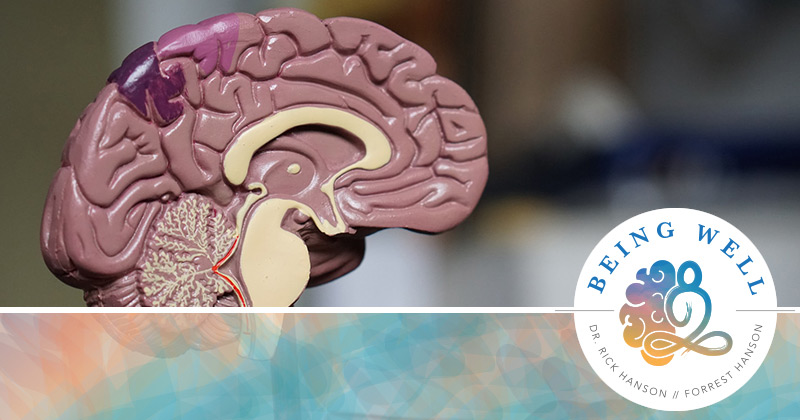
What can we do to achieve the ‘holy grail’ of personal growth – lasting change in our hearts, minds, and behaviors? How can we change the brain for good? That’s the focus of this episode: a full primer on the science of ‘positive neuroplasticity,’ including a lot of practical advice on how we can take control of our brain’s growth over time.
What are the consequences of growing up inside an abusive family, and what can we do as adults to heal old wounds? Today Forrest and I are joined by Pete Walker, a practicing therapist and expert in Complex PTSD.
What makes for a great team – whether personal or professional – and how can organizations and individuals create a more psychologically healthy environment? To help us answer that question, today Forrest and I are joined by one of the world’s leading scholars on what helps organizations learn and thrive: Dr. Amy Edmondson.
Sharon Salzberg, one of the most prominent teachers of mindfulness in the West, joins Forrest and me to discuss how we can create real change in our hearts, minds, and lives.

Learn some of the key psychological skills that lead to a truly great relationship – informed by 35 years of couples counseling experience, on this episode of the Being Well Podcast with Rick Hanson, Ph.D. and Forrest Hanson.

We all want great relationships – ones that are fulfilling, loving, stable, and fun. This is the first of two episodes focused on becoming a ‘great relater.’ Today Forrest and I focus on understanding our individual attachment style, and how we can work through our personal material.
In the second episode related to the pitfalls of self-help, we explore how individuals and environments can manipulate others by making them feel like something is wrong with them.
Dr. Stephen Porges joins Forrest and me to explore his Polyvagal Theory, which explains how we can use the systems of the body to completely change our relationship with stress.

Do self-help environments force us into inauthentic happiness? And how can we move away from the false front, and into more authentic expression? Today is the first of a series of conversations with Forrest dedicated to some of the self-help community’s pitfalls.