

It is sometimes said that the three greatest – and toughest, and most significant – remaining scientific questions are these: What caused the Big Bang? What is the “Grand Unified Theory” that integrates quantum mechanics and general relativity? What is the conscious self?
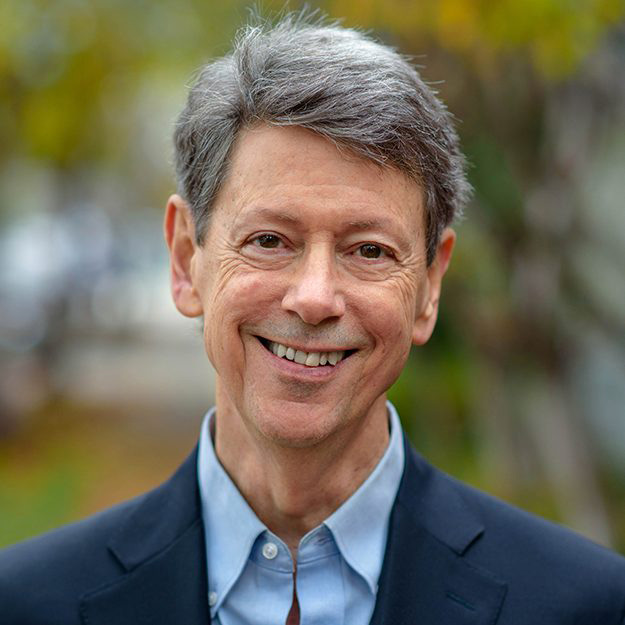
Rick Hanson
Author / Psychologist
Follow on:
Expertise
Biography
Rick Hanson, Ph.D. is a psychologist, Senior Fellow at UC Berkeley’s Greater Good Science Center, and New York Times best-selling author. His eight books have been published in 33 languages and include Hardwiring Happiness, Buddha’s Brain, Resilient, Neurodharma, Just One Thing, Making Great Relationships, A Happy, Healthy Mom, and Mother Nurture – with over a million copies in English alone. He's the founder of the Global Compassion Coalition and the Wellspring Institute for Neuroscience and Contemplative Wisdom, as well as the co-host of the Being Well podcast – which has been downloaded over 30 million times. He offers free newsletters, and his online programs have scholarships available for those with financial needs. He’s lectured at NASA, Google, Oxford, and Harvard. An expert on positive neuroplasticity, his work has been featured on CBS, NPR, the BBC, and other major media. He began meditating in 1974 and has taught in meditation centers worldwide. He and his wife live in northern California and have two adult children. He loves the wilderness and taking a break from emails.
Articles
Oneness Podcast
We spoke about how Western Buddhism, transcendental learning and gratitude for opportunity all play an important role in getting in touch with your faith and finding true purpose and happiness in life.
Sex After Children
This is a BIG topic, so please consider this column a summary of the summary of what could be said about it. For much more information, please see chapter 8 of our book, Mother Nurture.
The Neurology of Intention
Our intentions arise in the brain, are represented in the brain, and are pursued in the brain. Where else? Therefore, a basic understanding of how intentions work in the brain – and thus in your mind – is a very useful thing to have.

The Two Wings of Psychological Growth and Contemplative Practice
Any form of psychological development requires two fundamental activities/skills/functions: being with what is and working with what is.
True Happiness
Is there a particular type of mindset keeps us from finding true happiness ? For our ancestors to survive, they learned to find the bad in situations. In today’s modern age, the human mind is still programmed to latch onto the bad even though that mindset is unnecessary.
When Kids Are Distractible or “Hyper”
The topic of ADHD is fairly controversial these days. There’s no controversy about the fact that individuals range on a spectrum of distractibility, restlessness, and impulsivity. In this post, we’ll explore what that spectrum means – and what to do about it.
How Gratitude Can Change Your Life
”Without gratitude, life can be lonely, depressing and impoverished. Gratitude enriches human life. It elevates, energizes, inspires and transforms, and those who practice it will experience significant improvements in several areas of life including relationships, academics, energy level and even dealing with tragedy and crisis.”
Right Mindfulness Part 2
The Eightfold Path is the fourth of the Buddha’s Noble Truths: the way that leads to the uprooting of the causes of suffering, and thus to increasingly stable and profound peacefulness, wisdom, virtue, and happiness. The heart of each element of the Path is non-clinging, the fundamental cause of the end of suffering.
Using the Will: Key Points
Using the will means helping yourself to want the good thing, to stick with your good resolutions and intentions easily, without white-knuckling. It’s a combination of virtue and good purposes.
How to Master the Superpower that Builds All Other Powers
In this episode – we go deep on mastering the superpower that underpins all other powers, how your brain’s automatic survival mechanism tilts you towards unhappiness, growing the mental resources to deal with the biggest challenges of your life
Train Your Brain: Taking in the Good – Key Points
In a profound sense, we are what we remember – the slow accumulation of the registration of lived experience. That’s what we have “taken in” to become a part of ourselves. Just as food becomes woven into the body, memory becomes woven into the self.